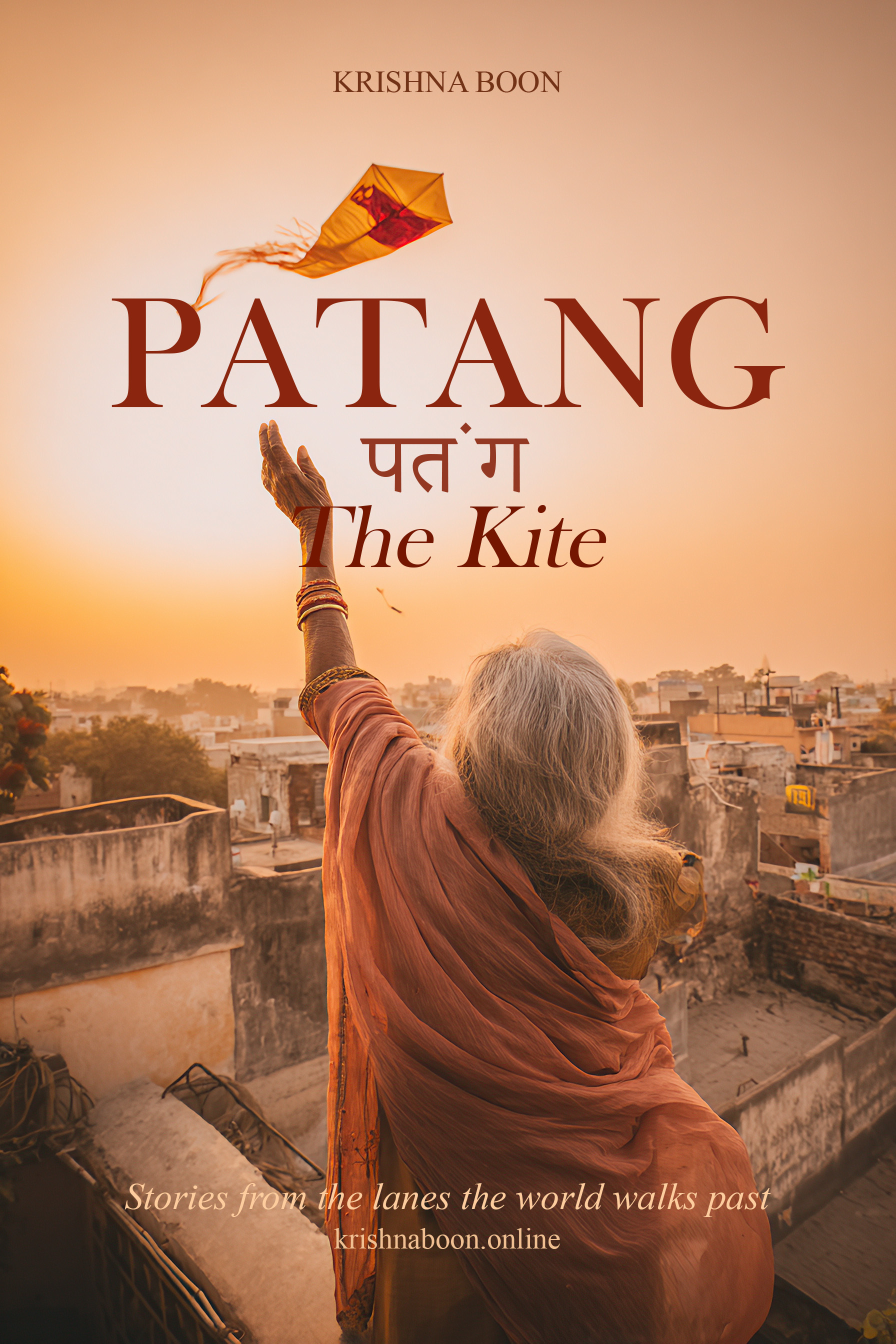
She tied her silence to a kite and let it go.
Kamla is seventy-two years old and she lives alone in an old pol neighbourhood in Ahmedabad. Every year on the morning after Makar Sankranti, while the city is still asleep, she walks the lanes and collects every broken kite the wind has left behind. She mends them. She gives them to the children who come to her door. She has done this for forty years. Nobody has ever asked her why.
Then a nine-year-old boy named Aarav decides to follow her.
What begins as curiosity becomes something neither of them expected — a friendship built in silence, on a rooftop, over mended paper and old cloth. And slowly, over the course of one winter, Kamla begins to tell Aarav the story she has told no one: the husband who left. The letter she folded after reading only the first line. The grief she carried alone for forty years because she believed it was the most loving thing she could do.
On the night before a children's kite competition, Kamla finally reads her husband's letter in full — for the first time in thirty-nine years. She reads her own unsent letter too. She mends his old kite with patches cut from her wedding sari. She ties both letters to the spine. And the next morning, she gives the kite to Aarav to fly.
"The string slips. The kite goes free. It carries two letters across the city and delivers them to the one person who needed to read them." — Patang
Patang is a story about the love that sacrifices without asking. About the silence that protects and the silence that costs everything. About what happens when we finally say the thing we have been holding for forty years.
"She tied her silence to a kite and let it go. She did not know that the wind would carry it straight to the one person who needed to read it." — Krishna Boon